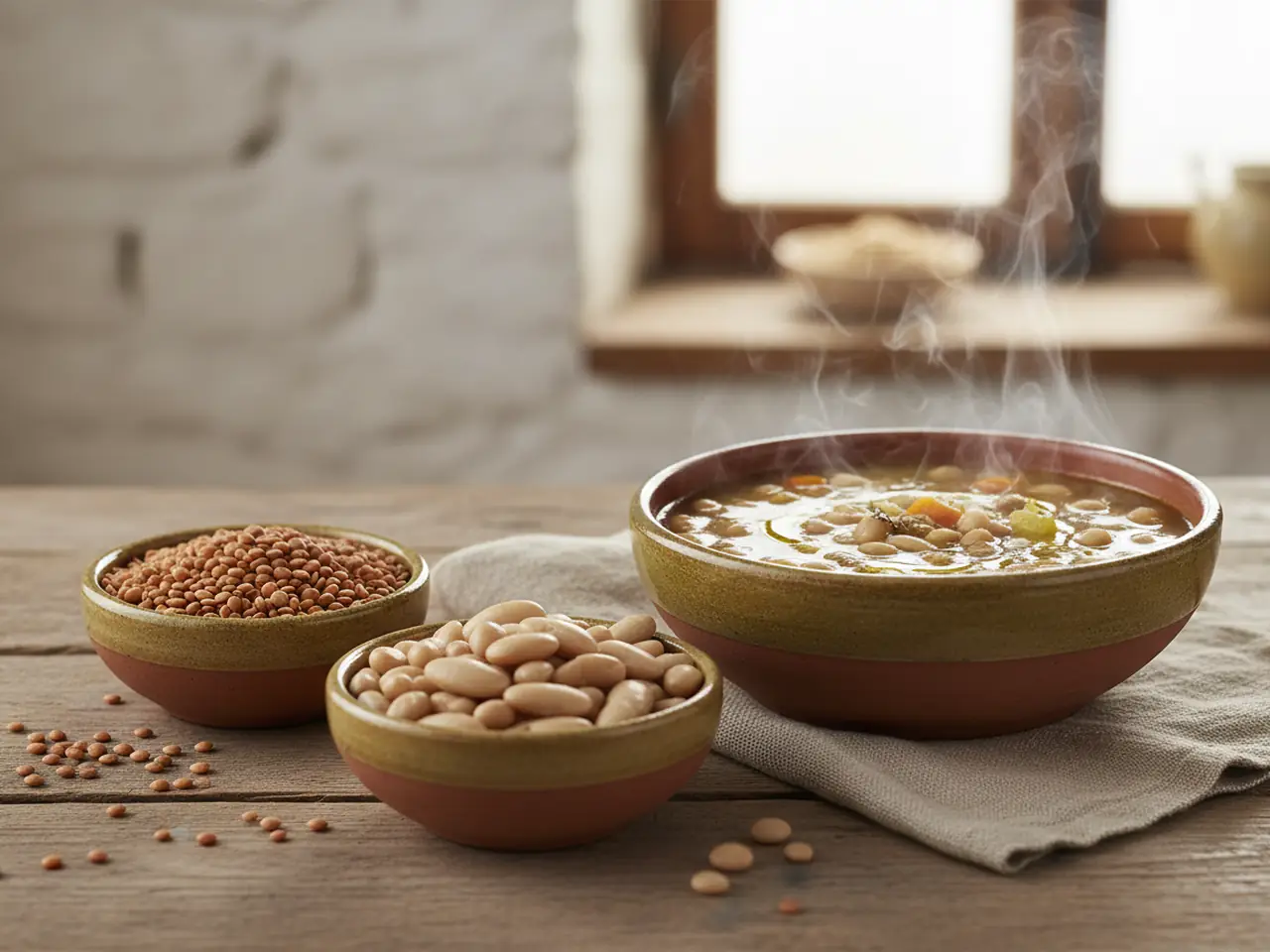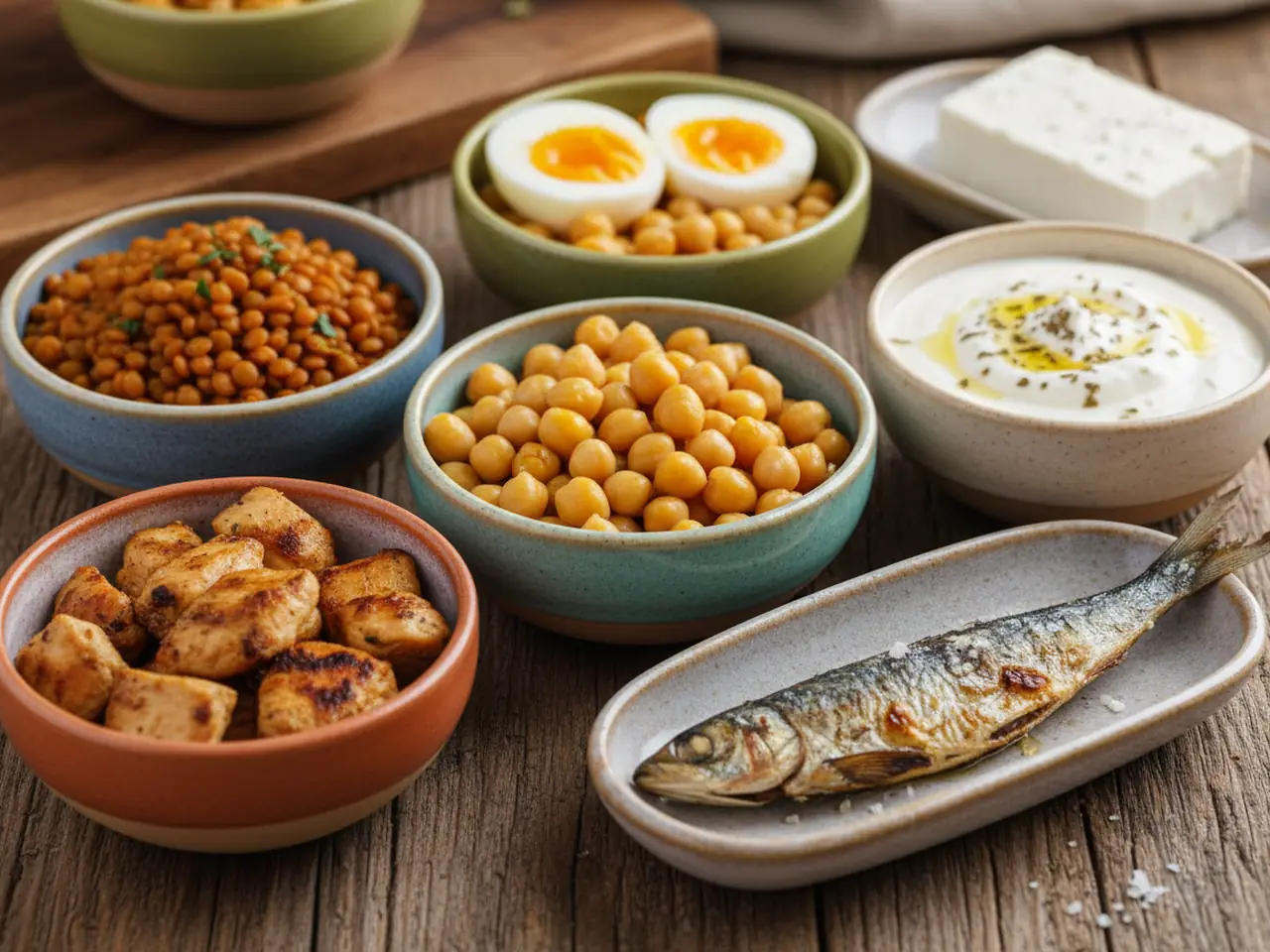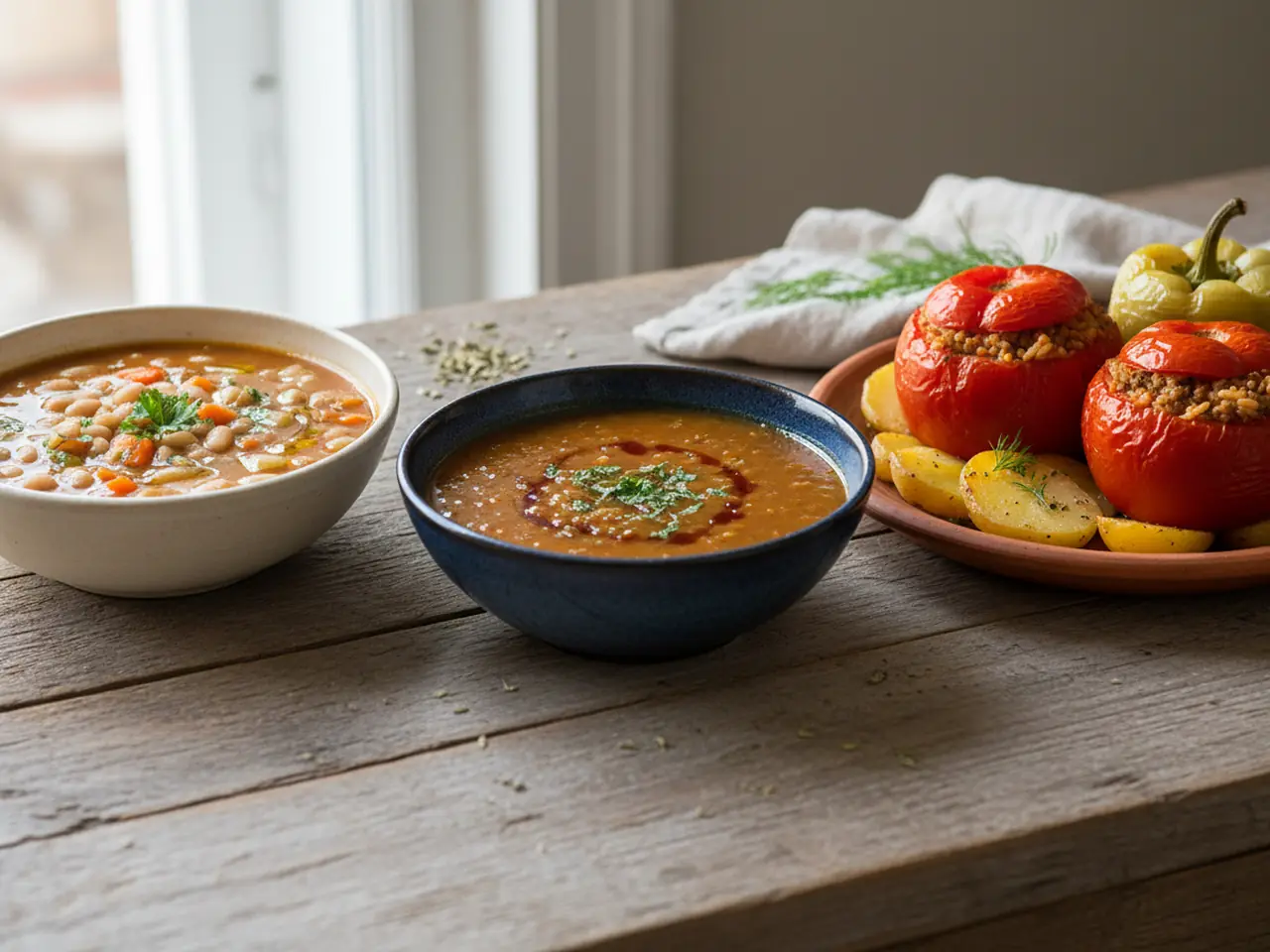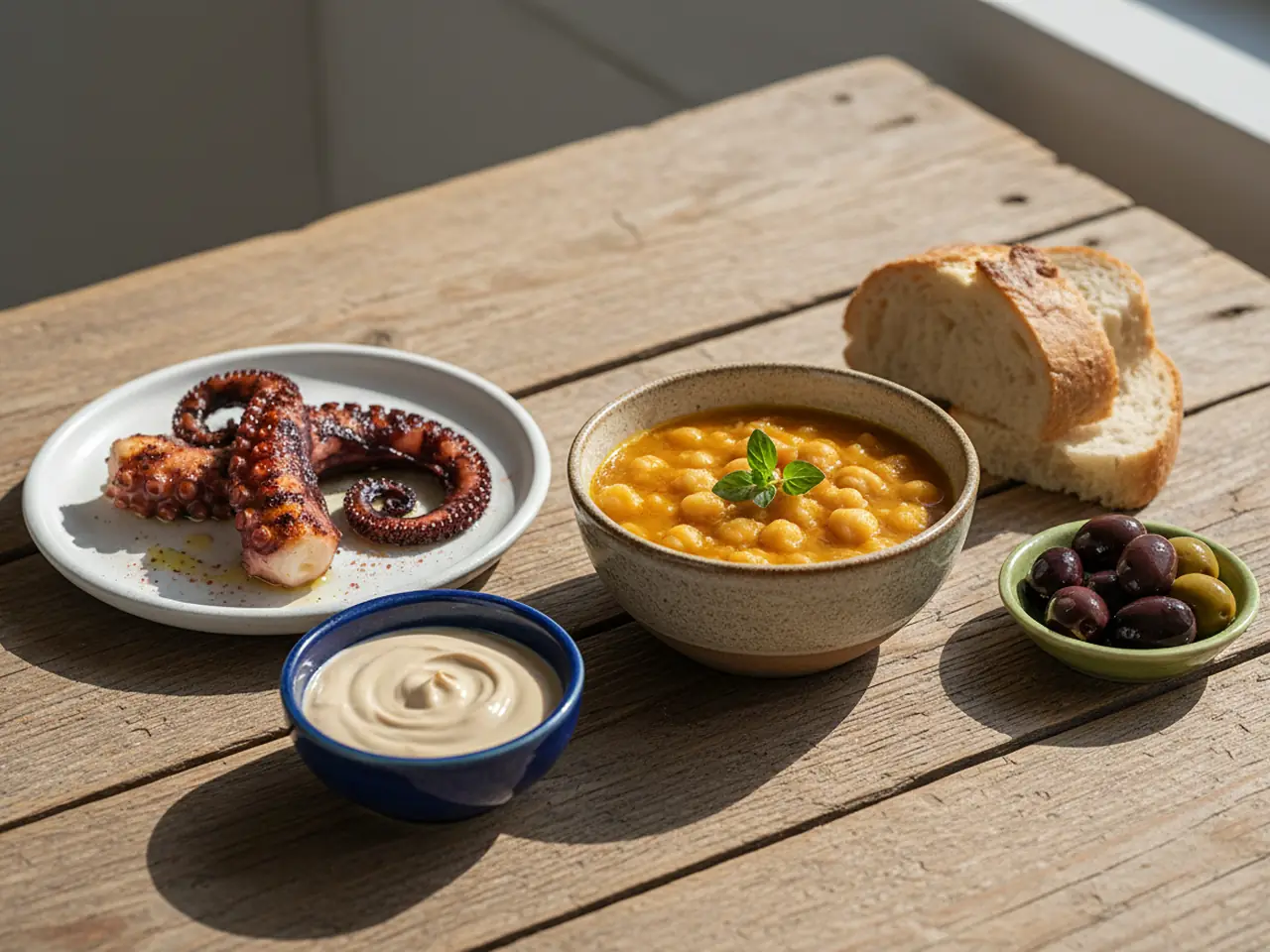
On fasting days, without meat, fish, dairy and eggs, protein comes from pulses, soya, wholegrain cereals, nuts and, where they are allowed, seafood. Greek studies found that people who fast often eat less protein and less calcium. With a little planning, a fasting day reaches 70 to 90 g of protein.
Fasting in the Orthodox Church can reach 180 to 200 days a year. For people who watch their weight or exercise, a key question is how to get enough protein without meat, fish, dairy and eggs. It can be done, as long as you plan for it.
What you can eat and when
The fasting rules vary from place to place and from person to person, and everyone follows the guidance of their spiritual father. The Greek National Dietary Guidelines summarise the tradition as follows:
| Period | Not eaten | Eaten |
|---|---|---|
| Wednesday and Friday, almost all year | meat, fish, dairy, olive oil | seafood |
| Christmas (Nativity fast), 40 days | meat, dairy, eggs | fish and olive oil, except on Wednesday and Friday |
| Great Lent, 48 days | meat, milk, eggs, fish except on 2 days, olive oil on weekdays | seafood, oil at the weekend |
| Dormition fast in August, 15 days | as in Lent, fish only on 6 August | seafood |
The guidelines state that prawns, squid, cuttlefish, octopus, lobster, crab and snails are allowed on all fasting days. Many of our recipes tagged ‘Fasting-friendly’ contain olive oil, so they suit the days when oil is allowed. For the days without oil, check the ingredients.
What Greek studies found
In Crete, researchers followed 120 adults for one year: 60 who fasted in all the fasting periods and 60 who did not.
- At the end of the fasting periods, those who fasted had 12.5% lower total cholesterol, 15.9% lower LDL and 1.5% lower body mass index than the others.
- They ate less fat and fewer calories, but also less protein and less calcium. Fibre and folate went up.
In another, smaller study of 59 people, those who fasted strictly for the 40 days before Christmas did not have iron deficiency. In 10 monks in Crete, the calcium they got from food was lower in the fasting week.
The studies were small and the people chose for themselves whether to fast, so the findings are of low certainty.
Other studies show what needs attention. Severe vitamin D deficiency was found in monks on Mount Athos. In 200 people who had fasted for decades, intake of vitamin B12, vitamin D, calcium and zinc was lower than in 200 people who did not fast, although most blood tests did not differ. These findings are also of low certainty.
How much protein fasting foods provide
With values from the app’s database, per usual serving:
| Food | Serving | Protein | Energy | Calcium |
|---|---|---|---|---|
| Lentils, boiled | 1 cup (200 g) | 20 g | 255 kcal | 79 mg |
| Chickpeas, boiled | 1 cup (165 g) | 14 g | 244 kcal | 119 mg |
| Beans, boiled | 1 cup (180 g) | 12 g | 203 kcal | 216 mg |
| Tofu | 100 g | 15 g | 147 kcal | 100 mg |
| Tempeh | 100 g | 18 g | 157 kcal | 88 mg |
| Soya drink with calcium | 1 glass (250 ml) | 10 g | 113 kcal | 250 mg |
| Wholewheat pasta, boiled | 1 cup (125 g) | 10 g | 224 kcal | 31 mg |
| Wholemeal bread | 2 slices (60 g) | 6 g | 140 kcal | 50 mg |
| Almonds | 1 handful (30 g) | 7 g | 185 kcal | 78 mg |
| Tahini | 1 tbsp | 3 g | 95 kcal | 43 mg |
| Octopus, boiled | 150 g | 45 g | 233 kcal | 159 mg |
| Squid, grilled | 150 g | 49 g | 224 kcal | 270 mg |
| Prawns, boiled | 150 g | 31 g | 137 kcal | 266 mg |
With the servings in our database, octopus and squid give more protein than a serving of grilled chicken, and prawns slightly less, all with few calories. Pulses give less per serving, but they also bring a lot of fibre. The Dietary Guidelines suggest combining them with cereals, such as bread, rice or pasta, for better protein quality.
Three fasting days from our recipes
We made three examples using only meals from the app, without meat, fish, dairy and eggs. All three contain olive oil.
| Day | Energy | Protein | Calcium | Fibre |
|---|---|---|---|---|
| With oil, no seafood | 1,488 kcal | 68 g | 548 mg | 50 g |
| With oil and more pulses and soya | 1,518 kcal | 69 g | 775 mg | 49 g |
| With oil and seafood | 1,648 kcal | 91 g | 723 mg | 42 g |
The first day has wholemeal bread with peanut butter and banana for breakfast, carrot and cucumber with hummus and nuts as a snack, fakes (lentil soup) with bread without the feta for lunch, fava (yellow split pea purée) with onion for dinner and a warm soya drink before bed. The seafood day changes lunch to octopus with short pasta and dinner to salad with black-eyed beans.
These are examples, not a plan. In the app, the grams come from your own calories. For an adult who does not exercise, the app aims for about 1.2 g of protein per kilo. So 68 g covers a person of about 57 kg and 91 g a person of about 76 kg. Read more in the article on protein.
Calcium and vitamin B12
Calcium. An adult needs about 950 to 1,000 mg a day, according to EFSA. The Dietary Guidelines list as sources pulses, almonds, okra, endive and, on days when fish is eaten, small fish eaten with their bones, such as sardines, anchovies and picarel. In our database, calcium-fortified soya drink, tahini and sesame also have a fair amount of calcium.
Vitamin B12. It is found almost only in animal foods. A serving of octopus or squid easily covers the 4 µg a day, and a serving of prawns more than half. On strict days without seafood there is almost no source of B12 among the foods in our database. Some soya drinks are fortified with B12, and this is stated on the label. The body has stores, and we don’t know whether short fasting periods cause deficiency. If you fast strictly for long periods, ask your doctor or pharmacist whether you need a supplement.
Fasting and weight loss
In the Crete study, those who fasted ate fewer calories and their body mass index fell slightly. This does not mean that fasting makes you lose weight on its own. Fasting foods have calories too, and oil, bread and nuts quickly push the total up.
In MesogeaFit you can select ‘I’m fasting today’ and choose without oil, with oil or with fish. Your calories and protein target stay the same.
Who should ask their doctor first
- Pregnant and breastfeeding women.
- People taking insulin, sulphonylureas or SGLT2 inhibitors for diabetes.
- Older people, and people with osteoporosis or low vitamin D.
- People with iron-deficiency anaemia. The Dietary Guidelines suggest eating pulses together with foods that contain vitamin C, such as tomato, pepper or lemon.
- People who have or have had an eating disorder.
Sources
- Institute of Preventive, Environmental and Occupational Medicine (Prolepsis) (2014). Greek National Dietary Guidelines for Adults: scientific evidence base (section 13.1) (in Greek). PDF
- Institute of Preventive, Environmental and Occupational Medicine (Prolepsis) (2014). Greek National Dietary Guidelines for Adults (in Greek). PDF
- Sarri KO et al. (2003). Effects of Greek Orthodox Christian Church fasting on serum lipids and obesity. BMC Public Health 3:16. PubMed 12753698
- Sarri KO et al. (2004). Greek Orthodox fasting rituals: a hidden characteristic of the Mediterranean diet of Crete. British Journal of Nutrition 92(2):277-284. PubMed 15333159
- Sarri KO et al. (2005). Is religious fasting related to iron status in Greek Orthodox Christians?. British Journal of Nutrition 94(2):198-203. PubMed 16115353
- Papadaki A et al. (2008). Calcium, nutrient and food intake of Greek Orthodox Christian monks during a fasting and non-fasting week. Public Health Nutrition 11(10):1022-1029. PubMed 18093353
- Karras SN et al. (2017). Health benefits and consequences of the Eastern Orthodox fasting in monks of Mount Athos. European Journal of Clinical Nutrition 71(6):743-749. PubMed 28327563
- Petridou A et al. (2021). Effects of periodic religious fasting for decades on nutrient intakes and the blood biochemical profile. Nutrients 13(11):3963. PubMed 34836217
- EFSA Panel on Dietetic Products, Nutrition and Allergies (2015). Scientific Opinion on Dietary Reference Values for calcium. EFSA Journal 13(5):4101. doi.org
- EFSA Panel on Dietetic Products, Nutrition and Allergies (2015). Scientific Opinion on Dietary Reference Values for cobalamin (vitamin B12). EFSA Journal 13(7):4150. doi.org
Last checked: October 2026. This article gives general information for adults and does not replace advice from a doctor or dietitian. If you find a mistake, write to us at info@mesogeafit.com.
The amounts for your own meals
MesogeaFit works out the grams of each meal from your details and corrects them every 2 weeks from your weigh-ins.